


The Five-Minute Reset Between Roles: A Threshold Ritual to Shed One Role Before the Next
The hardest minute of your day is the one between two lives - the car in the driveway, the hand on the door. Here is a five-minute threshold ritual, drawn...


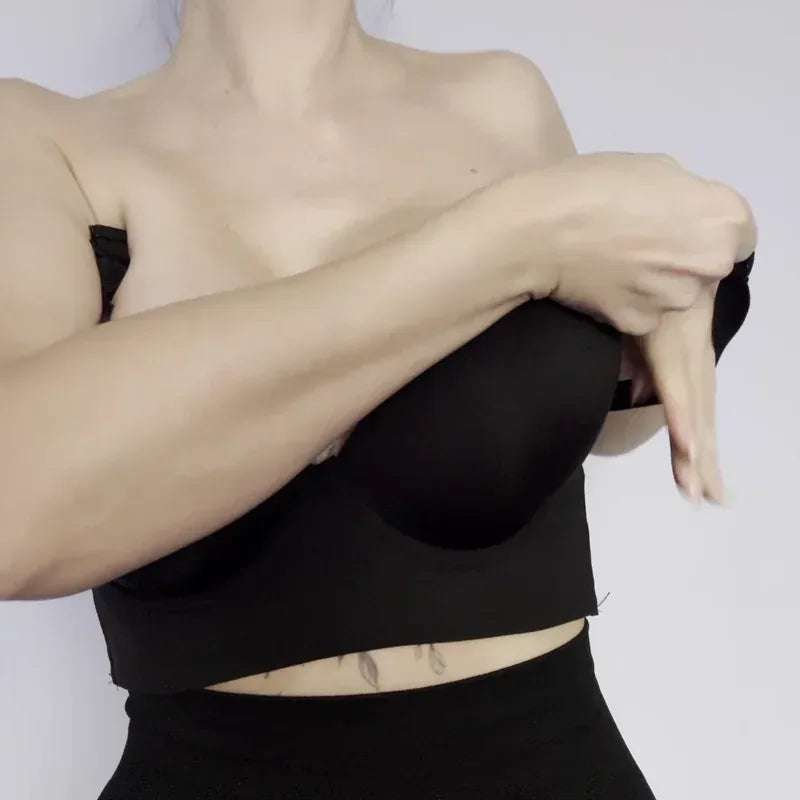
Lean forward so your breasts naturally fall into the cups. This helps them settle correctly inside.
Slide your arms through the straps. The straps should rest comfortably on your shoulders, and the closure should be positioned at your back.
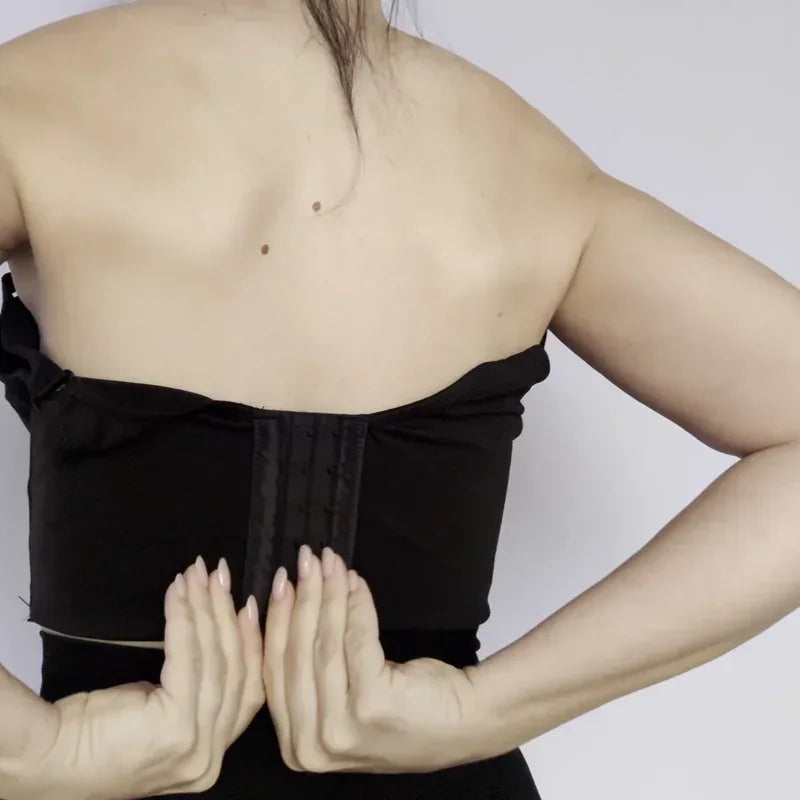
Hook the bra on the middle clasp (most have 2–3 options). If that feels tricky, you can fasten it in front of you at waist level and then rotate it around to the back.
Then with one hand, gently scoop each breast into its cup, guiding the tissue toward the center. Make sure the cups are smooth, fully filled, and your nipples are centered.
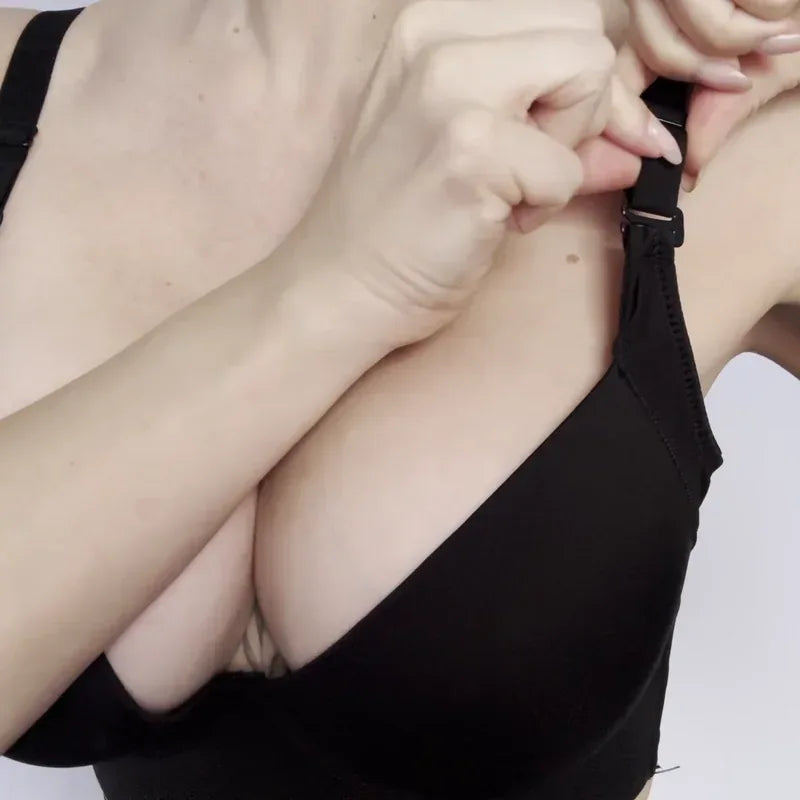
Stand upright and adjust the strap length. They should feel snug but not tight — you should be able to fit one finger under each strap without trouble.
Stand in front of a mirror and check four things at once. If two or more feel off, the size is wrong — not your body.
• Band — sits horizontal across the back, not riding up. Two fingers of give, no more.
• Straps — lie flat on the shoulders, no digging, no slipping.
• Cups — full but not spilling. Your bust should fill the cup smoothly, with the fullest point centered.
• Center gore (the panel between the cups) — sits flat against your sternum, not floating away.
If three out of four pass, you've found a bra you can wear all day.
For a full visual reference with diagrams, see our size guide →


Straps dig into my shoulders
Almost always a band issue, not a strap issue. The band should carry about 80% of the support — when it's too loose, the straps end up doing the band's job and cutting in.
Try going down one band size and up one cup letter (e.g. 36DD → 34DDD). This is called sister-sizing.
Band rides up my back
Same fix — the band is too loose. Go down one band size and up one cup letter. The band should sit level across your back, not creep up toward your shoulder blades.
Cups gap at the top
The cup is too big. Try one cup letter down, keeping the same band (e.g. 34D → 34C).
Less commonly, your bust shape is more "shallow projection" — wide and gently rounded rather than deep. In that case the cup style matters more than the cup letter. Wireless balconette or T-shirt cuts work better than plunge.
Cups spill over the top or sides
The cup is too small. Try one cup letter up, keeping the same band (e.g. 34C → 34D).
If spillage is at the side (under the arm), it usually means you skipped the scoop-and-settle step — go back to Step 4.
Center panel between cups floats away from my body
Almost always the cup is too small — the cups are pulling the center panel forward because they can't contain the bust. Size the cup up first, before touching the band.
Underwire pokes into my bust tissue
Three possible causes, in order of likelihood:
1. Band is too small — the underwire is sitting on bust tissue instead of behind it. Go up one band size and down one cup letter.
2. Cup is too small — same effect. Go up one cup letter.
3. Underwire shape doesn't fit your bust shape. Less common, but some bras have wider or narrower wires than your body needs. Different style, not different size.
Straps slip off my shoulders
First try tightening the strap by an inch. If you've already tightened them to the maximum and they still slip, the band is too loose — the whole bra is shifting around, and the straps come off with it. Size the band down.
Some shoulder shapes (narrow / sloped) are naturally harder to keep straps on — for those, look for wider straps with grippier inner lining, or styles labeled as "petite frame" friendly.

Wide-strap bras for fuller busts
Why straps fail, what wide actually means, and what to test before you commit.
The hardest minute of your day is the one between two lives - the car in the driveway, the hand on the door. Here is a five-minute threshold ritual, drawn...

One small bag, a week of cobblestones and late dinners, and never the same outfit in a photo. Here is the summer capsule that packs light, survives the heat, and...

See the outfits each level works under, the tweak for your body type, the styling tricks that read well in photos, and how to stay comfortable from the office to...